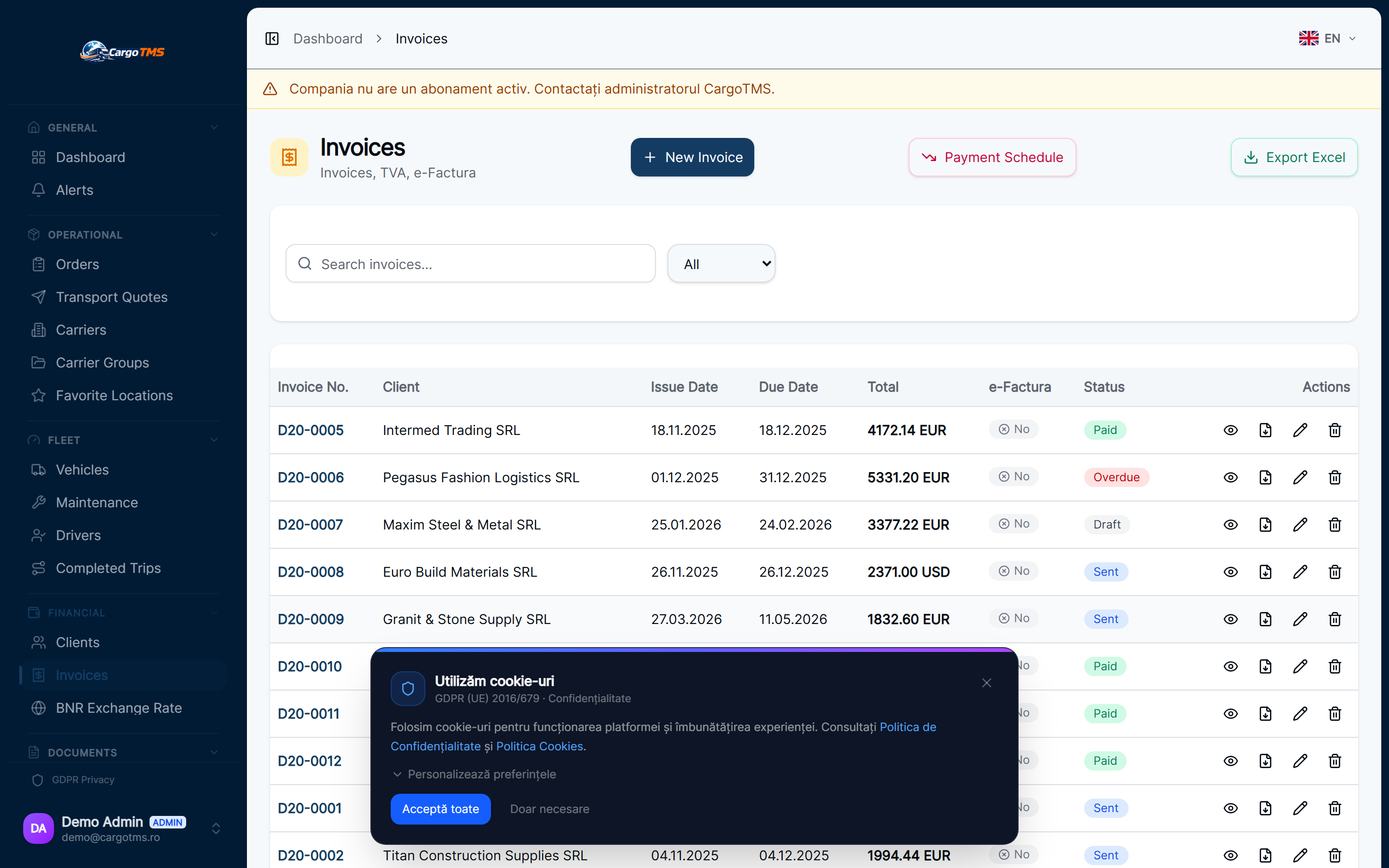
Transport invoicing has a specific problem: the volume of transactions is high, the margins are tight, and each unpaid invoice represents a real cash flow impact that compounds over time. A fleet running 80 trips per month with a 10% unpaid invoice rate has cash tied up in 8 outstanding invoices at any given time — and if average payment delay is 45 days, that's a significant working capital drag. The solution isn't tougher payment terms: it's better visibility into what's outstanding and a systematic process for following up.
The Invoice Tracking Problem in Transport
In many transport operations, invoicing is managed partly in an accounting tool and partly in the operational system — with a gap between them that creates blind spots. The dispatcher knows when a delivery was completed; the accounts team knows when an invoice was issued. But neither has a complete real-time view of: which deliveries haven't been invoiced yet, which invoices are approaching their due date, which have passed their due date without payment, and which clients have multiple outstanding invoices. Without this consolidated view, follow-up is reactive rather than systematic — triggered by cash flow pressure rather than by a structured review process.
How Invoice Visibility Works in CargoTMS
CargoTMS connects the delivery workflow directly to the invoicing pipeline. When an order is completed and a CMR is collected, the invoicing status becomes visible: uninvoiced, invoiced, paid — and when each of these milestones happened. This means dispatchers and account managers see the same operational truth: which completed trips are awaiting invoicing, which invoices are open, and which are overdue. There's no separate reconciliation required between the operational system and the accounting records.
Integration with Accounting Software
CargoTMS integrates directly with Oblio and SmartBill — the most widely used accounting platforms in Romania. This means invoices can be generated and issued from within the operational system without manual re-entry in a separate tool. The integration eliminates the risk of invoices being created in the TMS but not reflected in accounts, or of accounting records referencing orders that the operational system doesn't recognise. What gets completed in operations becomes billable in accounts without any intermediate step.
Client Portal Visibility: Fewer Payment Disputes
A significant source of payment delay is the "I didn't receive the invoice" or "the CMR wasn't included" dispute. CargoTMS client portals give clients direct access to their invoices and associated documents. When a client can see and download their invoice and CMR in real time from their portal, the administrative barrier to payment is removed — and payment disputes based on missing documentation are eliminated before they start.
💡 Key Takeaways
- Set up a weekly review of the invoice status dashboard — catch overdue invoices before they become a month overdue.
- Enable client portal access for your high-volume clients to reduce document-related payment delays.
- Use the Oblio or SmartBill integration to eliminate double-entry between operational and accounting systems.
- Track payment timing by client to identify which relationships have structural payment issues.
- Mark invoices as paid in CargoTMS as soon as payment is confirmed — keep the status accurate for the whole team.
Unpaid invoices aren't usually the result of clients who won't pay — they're usually the result of a system that doesn't make it easy to identify what's outstanding, follow up systematically, and remove the administrative friction that delays payment. Better invoice visibility isn't a finance function: it's an operational function that starts with how deliveries are confirmed and documented.
Frequently Asked Questions
Does CargoTMS replace my accounting software?
No. CargoTMS is the operational and invoicing management layer — it integrates with dedicated accounting tools (Oblio, SmartBill) rather than replacing them. The two systems work together, with CargoTMS handling operational tracking and the accounting tool handling fiscal compliance.
How does the Oblio and SmartBill integration work?
Invoices generated in CargoTMS are pushed to the connected accounting tool via API. This means the invoice is created in one place and reflected in both systems without manual re-entry. Payment status can also be synchronised back into CargoTMS.
Can I see overdue invoices at a glance?
Yes. The invoice dashboard in CargoTMS provides a status overview with filters for payment state — making it straightforward to see which invoices are overdue, by how many days, and for which clients.
Can clients download their invoices from the portal?
Yes. Clients with portal access can view and download all invoices issued to them via CargoTMS. This reduces the volume of document requests your office receives and removes a common source of payment delay.
Want to see this in CargoTMS?
Request a free personalised demo. We'll walk you through the exact workflow described in this article.
🚀 Request Free Demo