Most transport companies track fuel the same way they did ten years ago: paper receipts handed in at the end of the week, manual entry into a spreadsheet, and a reconciliation attempt at month-end that's always too late to act on. By the time a pattern of waste is visible, thousands have already been lost. Automated fuel tracking in CargoTMS changes the economics of fleet management — moving from reactive accounting to proactive cost control.
Why Manual Fuel Tracking Fails At Scale
With two trucks, manual tracking is annoying but manageable. With ten or more vehicles, it becomes a blind spot. Drivers refuelling off-route, cards used at unexpected times, consumption figures that don't match distances — these anomalies get buried in spreadsheet rows and only surface when reviewing the previous month's costs. By then, the behaviour has been repeated dozens of times. Manual tracking creates a lag between the event and the awareness of it — and in fleet management, that lag is where the losses accumulate.
How Automated Fuel Tracking Works in CargoTMS
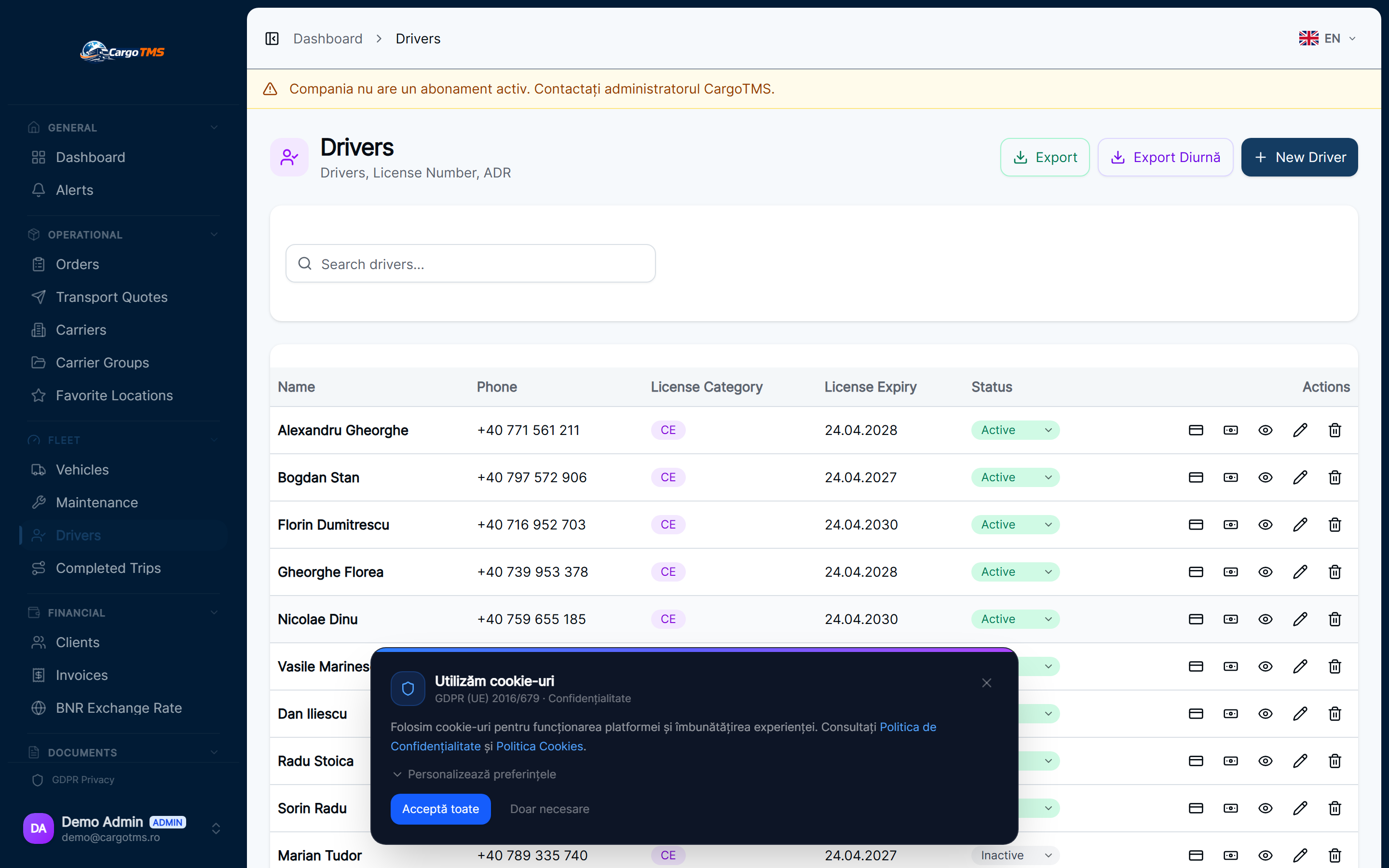
CargoTMS links each refuelling event directly to the vehicle and driver responsible. Every fueling is recorded with quantity, location, cost, and the associated trip — giving a complete picture of fuel consumption at the route level. The system calculates cost-per-km automatically for each completed trip, allowing direct comparison between vehicles, drivers, and routes. There's no separate import process and no manual matching — the data flows as part of normal operations.
Anomaly Detection: Finding Waste Before It Compounds
CargoTMS automatically flags refuelling events that deviate from expected consumption. This includes refuelling amounts that are statistically unusual given the vehicle's tank capacity, consumption rates that significantly exceed historical averages for that route or vehicle type, and transactions that don't align with the driver's active trip. These anomalies are visible to dispatchers without requiring any manual comparison — which means problems get spotted in days, not months.
Fuel Cards: Control Without Complexity
CargoTMS supports multiple fuel cards per driver. Cards are registered against the specific driver and vehicle, so every transaction is automatically attributed correctly. This eliminates the common problem of fuel expenses being "lost" between drivers when cards are shared or handed off. Fleet managers can review fuel card activity per driver or per vehicle, identify unusual patterns, and see a consolidated view of fleet fuel spending without manual collation.
Cost-Per-Trip and Route Profitability
One of the most powerful features of automated fuel tracking is the ability to calculate actual cost-per-trip. When fuel costs are linked to specific routes via CargoTMS, it becomes possible to compare the real profitability of similar routes over time. A route that appeared profitable at the invoicing stage may look very different when actual fuel consumption is included. This data drives better pricing decisions and helps identify routes where fuel efficiency improvements are most valuable.
💡 Key Takeaways
- Register every fuel card in CargoTMS and link it to the correct driver — even temporary assignments.
- Set expected consumption thresholds per vehicle type to make anomaly detection meaningful.
- Review anomaly alerts weekly — waiting for month-end reconciliation misses the cost-control opportunity.
- Use cost-per-trip data when reviewing pricing for regular routes.
- Compare fuel efficiency between similar vehicles to identify maintenance needs early.
Reducing fleet fuel costs isn't about driving less — it's about visibility. When every litre is tracked against the right trip, driver, and vehicle, waste becomes visible and actionable. CargoTMS automates this tracking as part of normal dispatch operations, so the insights are available without any extra administrative work.
Frequently Asked Questions
How does CargoTMS detect fuel anomalies?
The system compares actual recorded refuelling with expected consumption based on the trip distance and the vehicle's historical averages. Deviations above configurable thresholds are flagged automatically for dispatcher review.
Can I track multiple fuel cards per driver or vehicle?
Yes. Each driver can have multiple fuel cards registered in the system. All transactions are attributed to the correct driver and vehicle automatically, and the consolidated view shows per-driver and per-vehicle fuel spending.
Does fuel tracking require any additional hardware?
No. CargoTMS fuel tracking is software-only and works with manually entered or imported fuel card data. There's no telematics hardware required unless you choose to integrate an external fuel card provider.
How often should I review fuel data?
For proactive cost control, weekly reviews of new anomaly alerts are recommended. Monthly cost-per-km reports provide the strategic view for pricing and route planning decisions.
Want to see this in CargoTMS?
Request a free personalised demo. We'll walk you through the exact workflow described in this article.
🚀 Request Free Demo