🔍 The Core Challenges
- Order data lives in multiple sheets — duplicates and inconsistencies compound over time.
- No real-time status: spreadsheet rows do not update when a driver departs or a delivery is confirmed.
- Invoice generation requires manual cross-referencing between order sheets and billing templates.
- CMR documents stored as email attachments or physical folders — no link to the order record.
- Fuel expenses recorded separately with no connection to trips or route profitability.
- Month-end reconciliation takes days because nothing is linked automatically.
The Hidden Cost of Spreadsheet Operations
The true cost of spreadsheet-based transport management is not in the software — it is in the time spent maintaining inconsistency. A dispatcher with 30 active orders is typically spending 40–60 minutes per day on corrections: updating rows that were changed in one sheet but not the other, chasing document confirmations because there is no status field, and recalculating profitability figures that should be automatic. Multiply this across a year and the operational drag is significant — not in any single error, but in the aggregate friction.
Where Spreadsheets Break Under Fleet Scale
At single-digit vehicle counts, a well-structured spreadsheet is manageable. The problems multiply as the fleet grows. Multiple dispatchers editing the same file creates version conflicts. Driver communication over WhatsApp creates an unofficial information channel that contradicts the official records. Fuel costs cannot be tied to specific trips without manual matching. CMR documents arrive at unpredictable times and must be manually filed. Each of these friction points is individually small — but they accumulate into a structural overhead that limits how efficiently the company can scale.
What a Purpose-Built TMS Does Differently
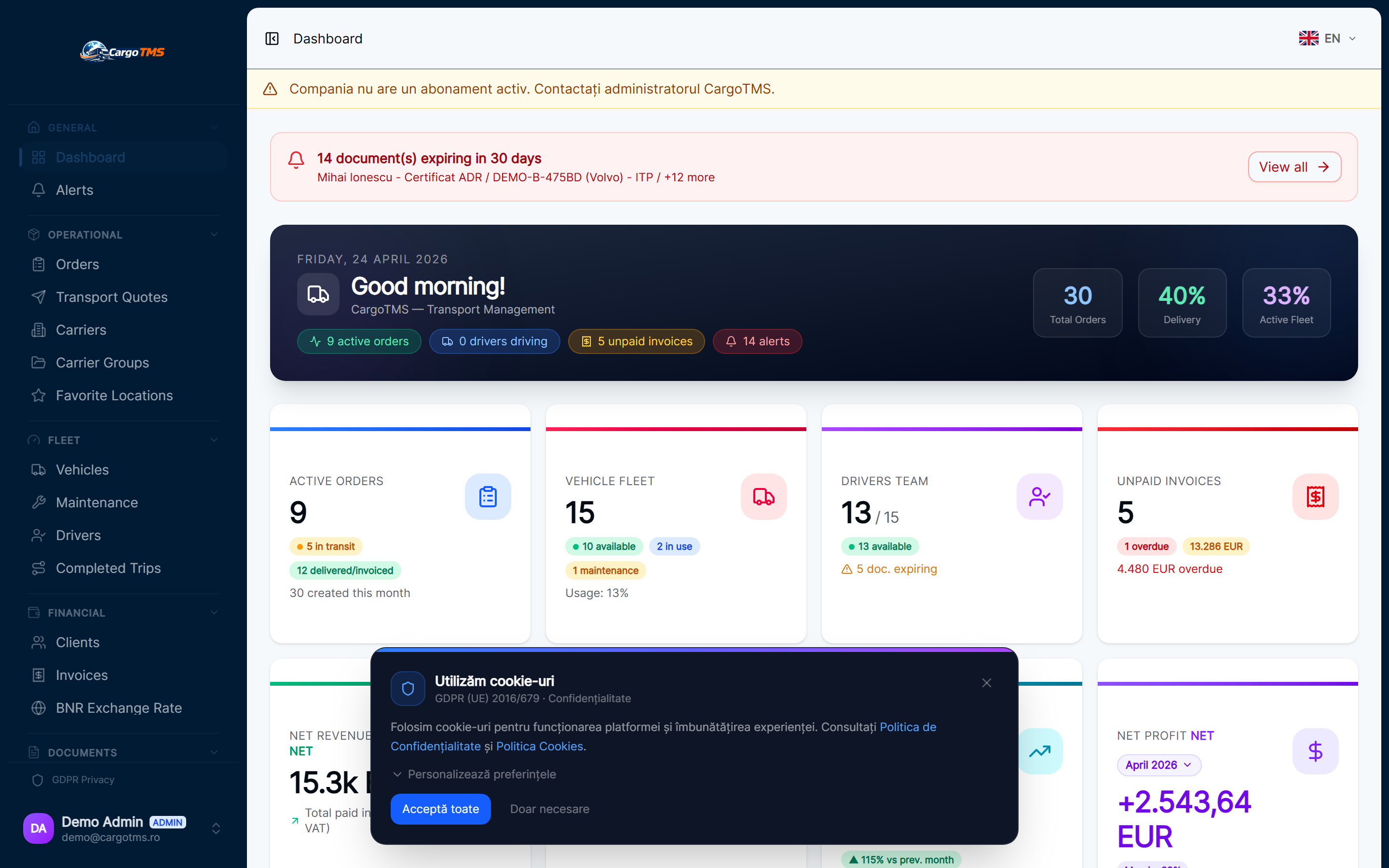
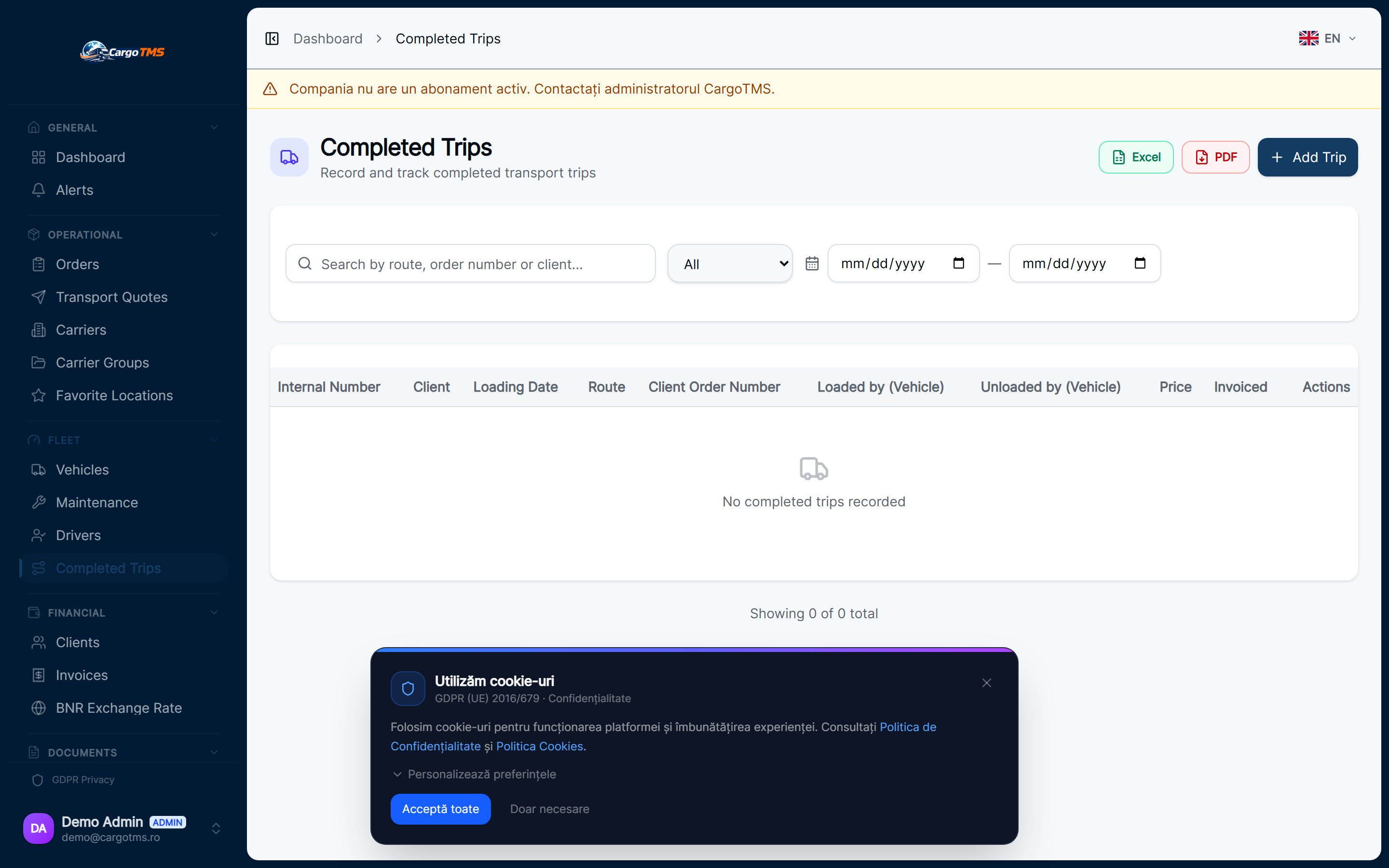
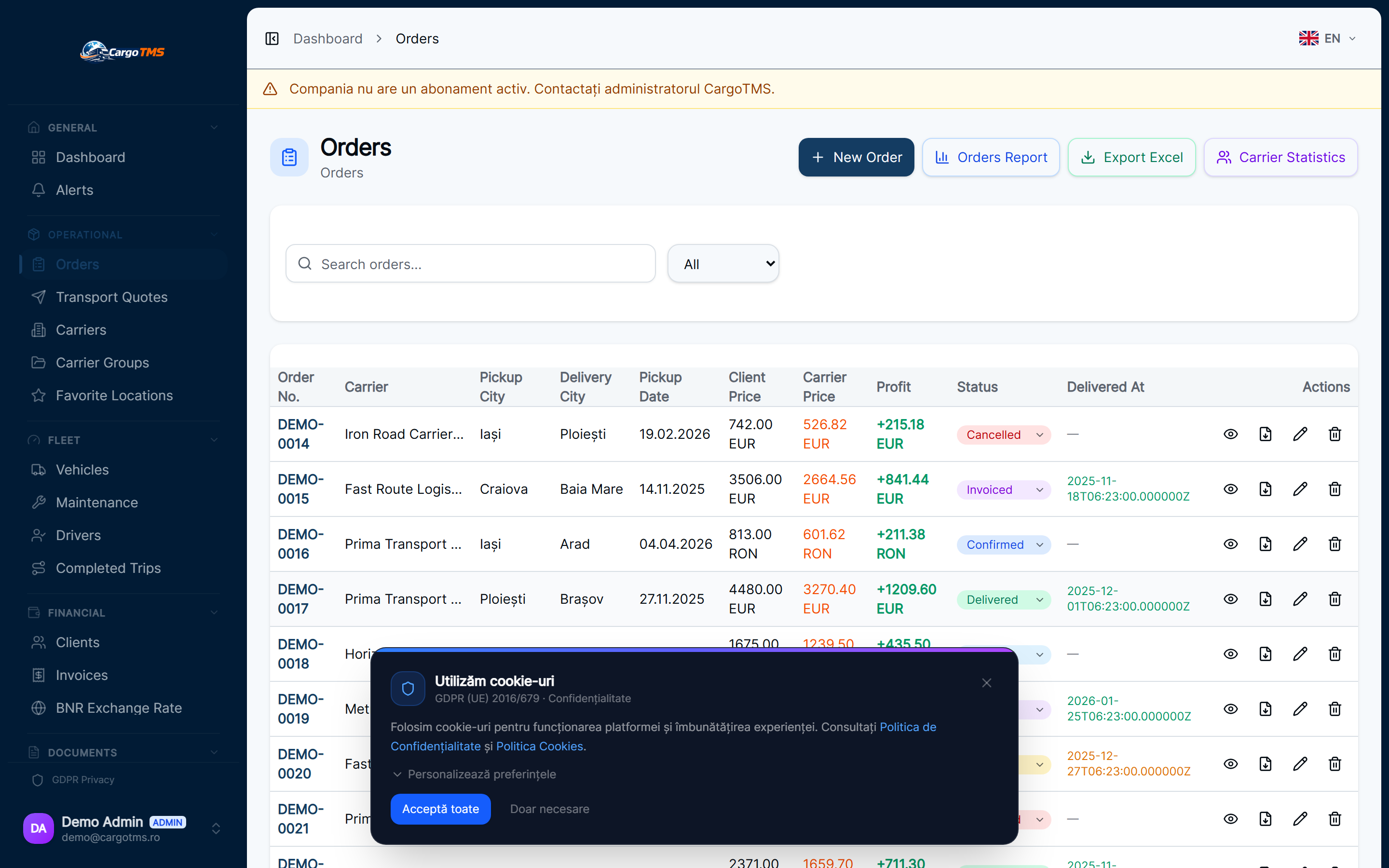
A transport management system designed for road operations treats orders, documents, drivers, fuel, and invoices as connected entities rather than separate sheets. When a driver confirms delivery through the Driver Portal, the order status updates. When a fuel stop is recorded, it links to the trip and contributes to cost-per-km calculations automatically. When an invoice is generated, the CMR documents are already attached because they were uploaded against the order. The elimination of manual linking is what makes operational scale manageable.
📊 Side by Side
| Operational area | ❌ Without CargoTMS | ✅ With CargoTMS |
|---|---|---|
| Order status tracking | Updated manually by dispatcher in a shared sheet | Updated automatically as drivers confirm events |
| CMR document management | Email attachments or physical folders | Uploaded by driver, linked directly to the order |
| Invoice generation | Manual copy from order sheet to billing template | Generated from order data with documents attached |
| Fuel cost tracking | Separate sheet, manual reconciliation at month-end | Linked to trips, cost-per-km calculated automatically |
| Driver communication | Phone calls and WhatsApp groups | Driver Portal: confirmations and documents via structured interface |
| Fleet profitability analysis | Manual calculation across multiple sheets | Real-time route and vehicle profitability from connected data |
Frequently Asked Questions
See these workflows in CargoTMS
Request a free personalised demo — we'll show you the exact operational flow relevant to your company.
🚀 Request Free Demo