🔍 The Core Challenges
- Dispatchers spend significant time on status calls that structured updates would eliminate.
- SLA breaches are discovered after the fact — there is no system that surfaces approaching deadlines.
- Fleet utilisation analysis requires manual spreadsheet work rather than being continuously visible.
- Client questions about delivery status require cross-referencing between systems or calling the driver.
- Fuel cost performance per route or per vehicle is not visible without monthly reconciliation.
- Invoice ageing is tracked manually — overdue invoices are often discovered late in the month.
The Cost of Operating Without Visibility
When dispatch operations run without real-time visibility, there is a consistent pattern: the dispatcher compensates for missing information through direct communication — phone calls, WhatsApp messages, email queries. This compensation is invisible in the accounting but very present in the working day. A dispatcher managing 30 active shipments without system visibility is making three to five status phone calls per hour. That overhead is not just time — it is interrupted attention, and interrupted attention means missed SLA windows and late document processing.
What Visibility Means at the Order Level
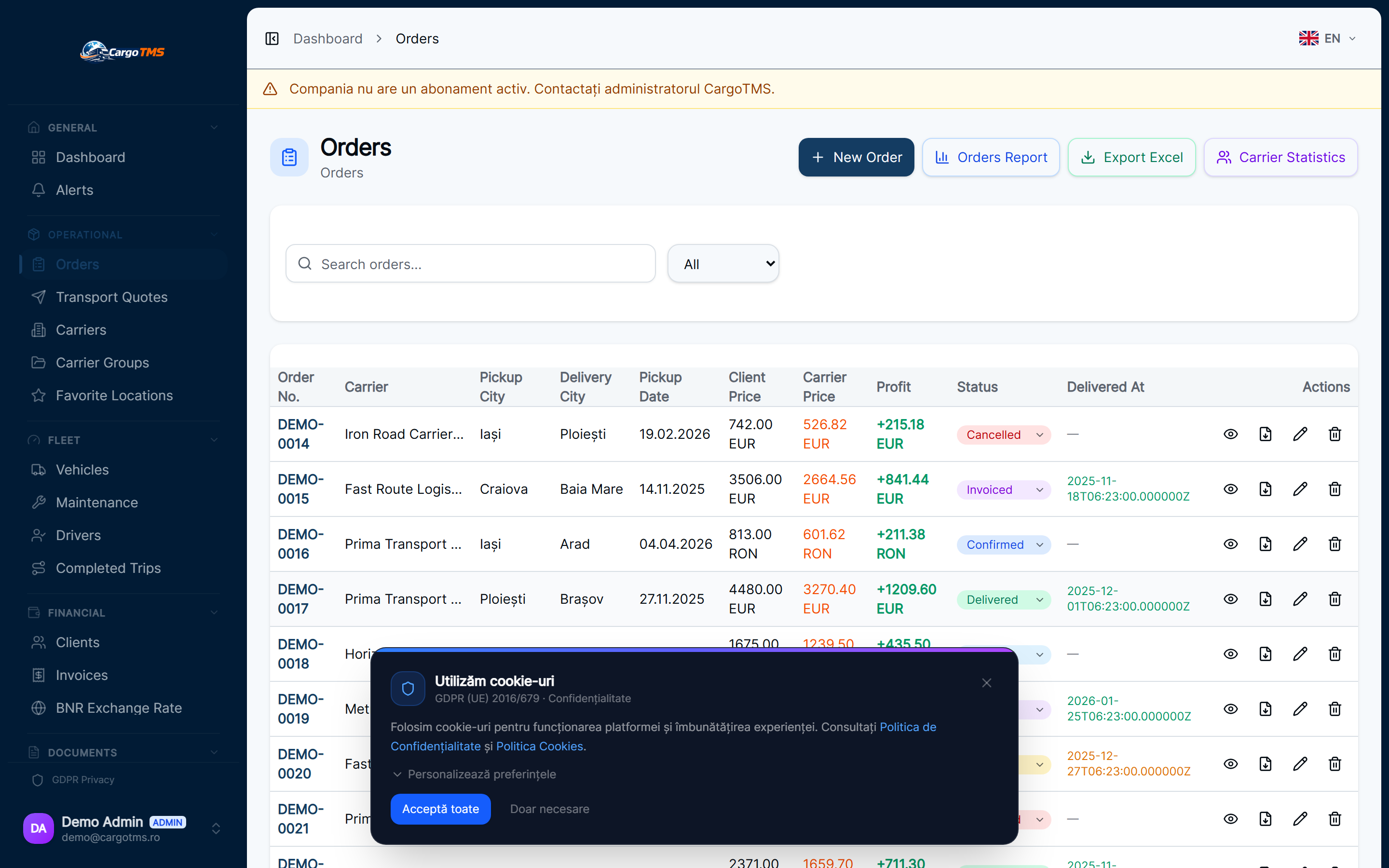
Order-level visibility means knowing, without making a call, that a specific shipment has departed loading, is en route, has encountered a stop, and has been delivered — with each event timestamped and linked to the order record. In CargoTMS, this visibility is provided by the driver confirming events through the Driver Portal as they happen. The dispatcher sees the Operations Center update in real time. The client can be updated immediately. Documents uploaded at delivery are already in the order before the driver calls the office.
Visibility at the Fleet and Business Level
Above the individual order, operational visibility means understanding fleet performance: which vehicles are completing routes most efficiently, which routes consistently run over cost, which clients are consistently generating payment delays, and which months are seeing increasing fuel anomalies. This level of analysis is not possible from WhatsApp group history or a spreadsheet updated daily. It requires data that is captured structurally as part of normal operations — not entered retrospectively for reporting purposes.
📊 Side by Side
| Operational area | ❌ Without CargoTMS | ✅ With CargoTMS |
|---|---|---|
| Active order status | Inferred from last driver call or WhatsApp message | Live in Operations Center: departure, loading, delivery confirmed |
| SLA management | Reactive: breach discovered via client complaint | Proactive: alerts before window closes, visible in dashboard |
| Document availability | Confirmed by calling driver or checking email | Documents uploaded by driver, visible in order record immediately |
| Fleet cost analysis | Month-end spreadsheet work across multiple sources | Continuous: cost-per-trip and anomalies visible in real time |
| Invoice ageing | Manual review, often late in the billing cycle | Invoice status visible per client, overdue flagged automatically |
| Client communication | Requires checking multiple systems or calling driver | Accurate status available immediately from order record |
Frequently Asked Questions
See these workflows in CargoTMS
Request a free personalised demo — we'll show you the exact operational flow relevant to your company.
🚀 Request Free Demo